The best potty training tips all start with the same idea: wait until your toddler is ready, then keep things calm, simple and consistent. Most children show signs of readiness somewhere between about 18 months and 3 years, and there is a wide range of normal within that window. Starting at the right moment usually means fewer accidents, fewer power struggles and a faster finish.
This guide gathers practical potty training tips for each stage: the readiness signs to look for, the gear you actually need, a step-by-step routine, and how to handle accidents, nights and the occasional setback — plus how to keep home and daycare on the same page.
- 18 mo–3 yrstypical readiness window
- 2 hoursdry stretches = a good sign
- Days firstnights often come later
- No pressurepraise effort, stay calm
Signs your toddler is ready to start
Age is only a rough guide. Readiness is really about your child’s body, communication and interest all lining up. Pediatric guidance, including from the American Academy of Pediatrics, encourages a child-led approach: watch for the signs, then start when your toddler — and your family schedule — can give it a fair try.
Common signs that it may be time:
Your toddler doesn’t need every sign. But if they can follow a simple direction, walk to the bathroom and show some interest, you have a good foundation. If they resist strongly, it’s fine to pause for a few weeks and try again — a short break is not a failure.
Big life changes, like a new sibling, a move or starting a new classroom, can make it harder to learn something new. If one of those is coming up, it often helps to wait until things settle.
The simple gear that helps
You don’t need a closet full of products. A few child-sized basics make the bathroom feel friendly and doable for small bodies:
- A small floor potty or a seat insert for the toilet
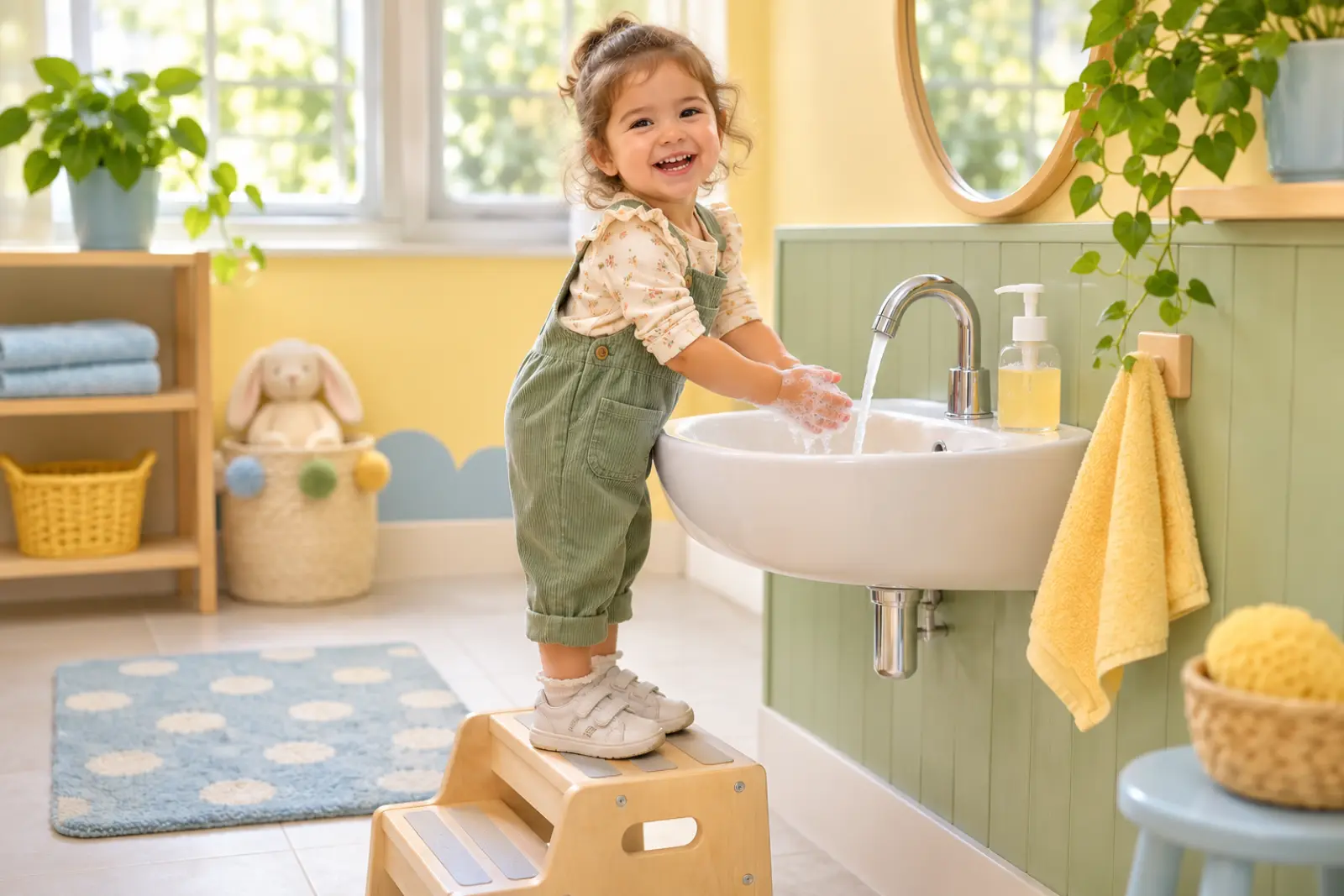
- A sturdy step stool for the toilet and sink
- Easy pull-up pants with elastic waists
- Plenty of spare underwear and clothes
- A picture book about using the potty
- A wet bag for the car and daycare cubby
Skip clothes with tricky snaps, overalls and belts for now. The faster your toddler can get their pants down, the more likely they are to make it in time.
Potty training tips: a step-by-step routine
Predictable steps help toddlers feel in control. Use the same short sequence every time so it becomes automatic:
- Offer a potty break at regular times
- Pants down, sit for a few minutes
- Wipe, flush and pants up
- Wash hands with soap and a song
Build potty breaks into the day
Good times to offer the potty are right after waking, before and after meals, before naps and bedtime, and before leaving the house. Offer rather than demand: “It’s potty time — do you want to walk or hop there?” A choice keeps your toddler involved without a standoff.
Keep sits short and relaxed
A few minutes is plenty. Read a short book or sing a song, then let your child get up whether or not anything happened. Long sits can turn the potty into something to avoid.
Praise the effort, not just the result
Notice every step: “You told me you needed to go!” or “You pulled your pants down all by yourself.” Simple, specific praise builds confidence. A sticker chart can help some toddlers, but warm attention is usually the biggest reward.
Teach hand-washing as part of the routine
A step stool at the sink, soap your child can reach and a short song for scrubbing make hand-washing part of “going potty,” not an extra chore.
How to handle accidents calmly
Accidents aren’t setbacks. They’re how toddlers learn what “I need to go” feels like.
Every child has accidents, often many of them in the first weeks. Of all the potty training tips in this guide, this one may matter most: how you respond matters more than how often accidents happen. A calm, matter-of-fact reaction keeps the potty from turning into a source of stress or a power struggle.
- Keep your voice neutral: “Oops, your pee came out. Pee goes in the potty. Let’s get clean clothes.”
- Let your toddler help with clean-up in a small way, like carrying wet clothes to the wet bag.
- Never shame, scold or punish. It tends to make children hold it in, which can lead to constipation.
- Look for patterns. Accidents during play often mean it’s time to offer more reminders.
If big feelings come up — and they might — the calm, connecting strategies in our guide to handling toddler tantrums work well here too.
Nighttime dryness and regression
Nights usually come later
Staying dry at night depends largely on how your child’s body develops, not on effort or willpower. Many children are dry during the day long before they are dry overnight, and nighttime accidents are common throughout the preschool years. It’s perfectly fine to keep using overnight pull-ups while you focus on daytime skills. A last potty trip before bed can help.
When a trained child starts having accidents
Regression is very common. A new baby, a move, illness, a busy week or simply being absorbed in play can all bring back accidents. Go back to more frequent reminders, keep your reactions low-key and offer extra connection. Most children get back on track within a few weeks.
When to talk to your pediatrician
Check in with your child’s doctor if your toddler has pain when peeing or pooping, hard or infrequent stools, blood in the urine or stool, or a sudden increase in accidents after being reliably trained. It’s also worth asking if you’re feeling stuck or worried. Your pediatrician can rule out medical causes and help you adjust your approach.
Keeping home and daycare consistent
Potty training tips work best when they’re applied the same way everywhere, because toddlers learn fastest when the routine and words don’t change. If your child is in childcare, talk with the teachers before you start. Agree on a few basics: which words you use for body parts and bathroom needs, how often potty breaks are offered, and how accidents are handled.
How often do you offer potty breaks, and how can I match that schedule at home on weekends?
Send plenty of spare clothes, share what’s working at home and ask what the teachers are seeing. Small, consistent details make a big difference.
At Bright Learning Academy potty training support is part of our toddler program. Teachers use positive reinforcement, build self-help skills like hand-washing and dressing into the day, and share progress with families through our daily parent updates.
Wondering how potty skills fit into the bigger picture? Our checklist on whether your child is ready for preschool covers the self-help, social and communication skills that matter as your toddler grows.
Potty training FAQ
What is the best age to start potty training?
There isn’t one best age. Many children show readiness somewhere between about 18 months and 3 years. Watching for signs like staying dry for a couple of hours, telling you about a wet diaper and showing interest in the bathroom is more reliable than a birthday.
How long does potty training take?
It varies a lot. Some toddlers pick up daytime skills in a few weeks, while others take several months. Nighttime dryness often takes longer. Progress is rarely a straight line, so expect some ups and downs.
Should I use pull-ups or underwear during the day?
Many families switch to underwear during the day once training starts, because toddlers can feel when they’re wet. Pull-ups can still be handy for naps, nights and long car rides. Choose what works for your family and keep it consistent with your childcare provider.
What if my toddler refuses to use the potty?
Take a break for a few weeks and try again without pressure. Refusal is often a sign your child isn’t quite ready or is feeling pushed. Offering choices, reading potty books and letting them see the routine can rebuild interest. If you have concerns, talk to your pediatrician.
Potty training is a team effort
Patience, a predictable routine and lots of encouragement will carry your toddler a long way. And you don’t have to do it alone — when home and the classroom work together, children gain confidence faster. Come see how our teachers support self-help skills every day.
Little steps, big confidence — one potty break at a time.