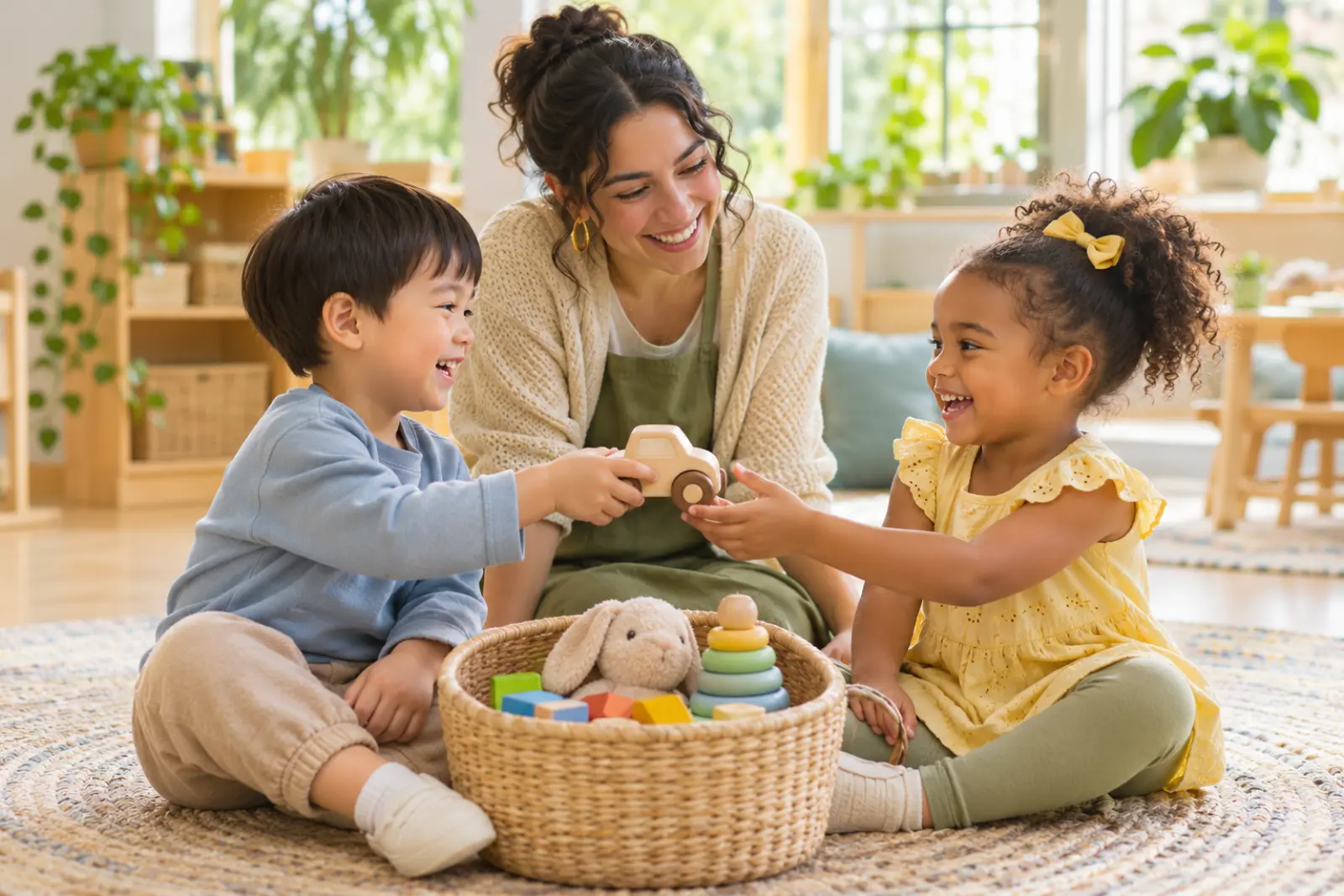
Taking turns, calming down after a disappointment, saying sorry, joining a game: these may not look like school subjects, but they’re some of the most important things your child learns before kindergarten. Social emotional skills help children understand their feelings, get along with others and make good choices, and they shape how ready a child is to learn everything else.
Here’s what social-emotional learning (often called SEL) really means, why it matters so much, how preschool teachers teach it every day, and simple ways to practice it at home.
- 5 core skillsfrom self-awareness to good choices
- Every daylearned in real moments
- Feelings wordsthe first tool to teach
- Home + schoolwork best together
What are social emotional skills?
Social emotional skills are the abilities that help children manage themselves and their relationships. A widely used framework groups them into five areas, and each one has a clear preschool-sized version:
Noticing and naming feelings: “I’m frustrated because my tower fell.”
Calming down, waiting, and handling big feelings without hurting anyone.
Noticing how others feel and showing care, like bringing a sad friend a toy.
Sharing, taking turns, joining play, listening and making up after a conflict.
Thinking before acting and choosing a kind, safe way to solve a problem.
None of these are expected to be fully developed in preschool. Even adults are still working on them. What matters is steady, patient practice.
Why social emotional skills matter for school success
A child who can sit through a story, wait for a turn, ask for help and bounce back from a mistake is in a great position to learn. That’s why early educators see SEL as a foundation, not an extra. A growing body of research links strong early social-emotional skills with better outcomes later on, from school adjustment to friendships.
Kindergarten classrooms ask a lot of five-year-olds: following group routines, working with classmates, managing frustration and coping with being away from home. Social-emotional readiness sits right alongside letters and numbers on our kindergarten readiness checklist, and many parents are surprised to learn how much it matters.
These skills also grow in stages. Toddlers are just beginning to notice their own feelings and usually need an adult to help them calm down. Three- and four-year-olds start using words for feelings, playing cooperatively and trying simple solutions on their own, though they still need plenty of support, especially when they’re tired, hungry or facing something new. Expect progress, not perfection.
Children learn best when they feel safe, understood and connected to the people around them.
How preschool teaches social-emotional learning
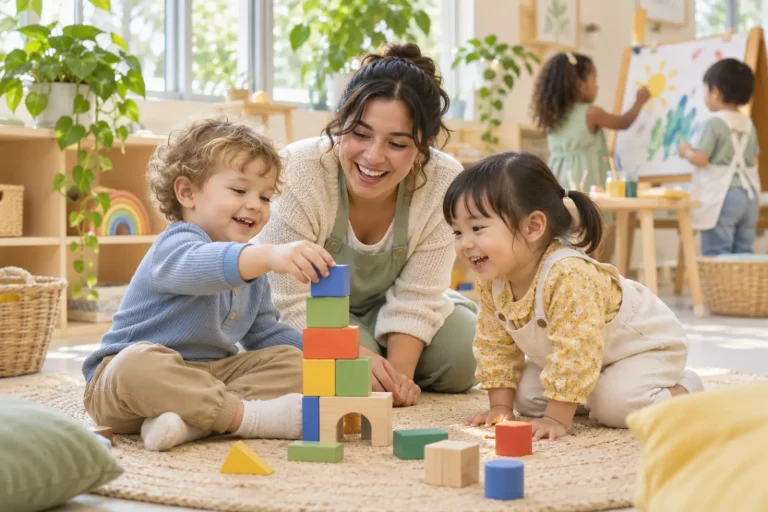
In a good preschool, SEL isn’t a once-a-week lesson. It happens all day, in the small moments that come up naturally when a group of young children learn and play together.
Classroom jobs
Line leader, plant waterer, snack helper: jobs give children responsibility and a sense of belonging. They learn that the group depends on them, and that everyone contributes.
Turn-taking and sharing
Teachers use simple tools like sand timers, waiting lists for a popular toy and turn-taking games. Over time, waiting becomes more manageable because children trust that their turn will come.
Feelings words
Children can’t manage a feeling they can’t name. Teachers point out feelings in books, faces and real moments, building a vocabulary well beyond “happy” and “sad”:
A calm corner
Many classrooms have a cozy, quiet spot with soft pillows, books and calming tools where a child can go to settle big feelings. It isn’t a punishment. It’s a place to practice calming down, often with a teacher nearby.
Guided conflict resolution
When two children want the same truck, teachers don’t just solve it for them. They guide children through simple steps:
- Stop and breathe
- Say the problem
- Think of ideas
- Pick one and try it
At Bright Learning Academy social-emotional learning is part of every day. In our preschool program, children take on classroom jobs like line leader and helper, and teachers guide them through conflict resolution and emotional regulation. Self-regulation, social awareness and decision-making are core learning areas in our curriculum.
Teacher language you can borrow
The way adults talk in hard moments teaches children as much as any lesson. Early childhood teachers lean on short, calm phrases that name feelings and point toward a solution. Here are a few you can try at home:
| Instead of… | Try saying… |
|---|---|
| “Stop crying.” | “You’re sad that playtime is over. I’m here.” |
| “Share with your sister.” | “Your sister is waiting. Let’s set a timer so you each get a turn.” |
| “Say sorry right now.” | “Look, he’s hurt. What could we do to help him feel better?” |
| “Calm down!” | “Your body looks upset. Let’s take three big breaths together.” |
| “Good job.” | “You waited for your turn even though it was hard. That was patient.” |
When feelings get very big, the same approach applies: stay calm, keep words few, and reconnect afterward. Our guide to handling toddler tantrums walks through those moments step by step.
Simple ways to practice at home
Try a few of these this week. Tick them off as you go; small, repeated moments matter more than big lessons.
All seven done. That’s a week full of growing hearts!
Frequently asked questions
What are examples of social emotional skills?
Naming feelings, calming down when upset, taking turns, sharing, showing empathy, making friends, following group routines and solving small conflicts with words are all everyday examples for young children.
At what age do children develop social emotional skills?
These skills start developing in infancy, through warm, responsive relationships, and keep growing throughout childhood. The preschool years are a period of big growth, as children spend more time playing and learning in groups.
What is a calm corner in preschool?
A calm corner is a cozy, quiet spot with soft seating and calming tools where a child can go to settle big feelings. It’s a place to practice self-regulation, not a time-out or punishment.
What if my child struggles with these skills?
Every child develops at their own pace, and most social struggles in preschool are a normal part of learning. If you notice ongoing difficulties, such as frequent aggression, very intense or long-lasting meltdowns, or little interest in other people, talk with your child’s teachers and your pediatrician.
Growing kind, confident kids together
Feelings words, turn-taking and calm-down strategies grow a little every day, at school and at home. If you’d like to see how our teachers nurture social-emotional learning through classroom jobs, play and caring guidance, we’d love to show you.
Big feelings, little steps, growing hearts.