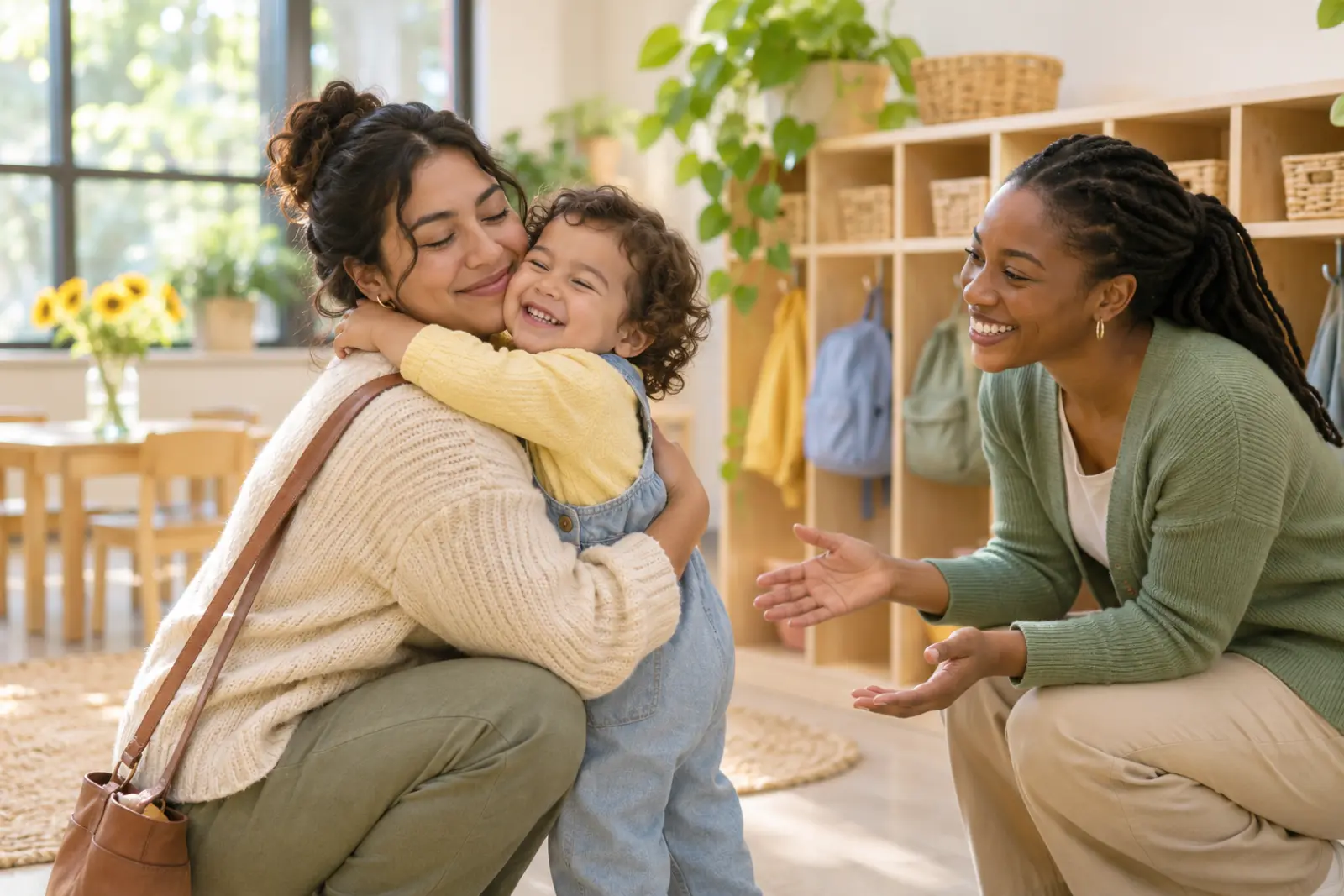
Few moments tug at a parent’s heart like a little one crying “Don’t go!” at the classroom door. Separation anxiety at daycare drop-off is one of the most common worries parents share, and it is also a normal, healthy sign that your child is deeply attached to you. With a calm plan and a little patience, most children learn that goodbyes are safe because you always come back.
Here is why it happens, nine gentle tips that help, and when it’s worth asking for more support.
- 10–18 moa common peak age
- 1–2 minfor a loving goodbye
- Alwayssay goodbye, never sneak out
- A few weeksto settle, for many kids
Why separation anxiety happens
As babies grow, they begin to understand that people still exist when they are out of sight, but they don’t yet understand when, or whether, those people will return. That mix of new awareness and limited experience is what makes leaving so hard.
Separation anxiety often appears in the second half of the first year and tends to be strongest somewhere between about 10 and 18 months. For many children it eases gradually through the toddler and preschool years, though it can flare up again with any big change: a new classroom, a new sibling, a move or simply returning after a holiday.
At drop-off, it might look like this:
The encouraging part: many children calm down within minutes of their parent leaving. The hardest part of the goodbye is often the part you see.
9 tips for separation anxiety at daycare drop-off
No single trick works for every child, but these steps build the predictability and trust that make goodbyes easier over time.
1Preview the day together
Children cope better when they know what’s coming. On the way, talk through the day in simple words: “First you’ll play, then snack, then outside, then I’ll pick you up after nap.” Picture books about school and goodbyes can help too. If your child is just starting, our guide to preparing for the first day of daycare has a full timeline.
2Practice short separations
Brief, positive practice outside daycare, like an hour with a grandparent or a trusted sitter, shows your child again and again that you leave and return. Start small and build up.
3Keep mornings consistent
A predictable morning lowers stress before you even reach the door. Try to keep wake-up, breakfast and departure times similar each day, and allow enough time that nobody feels rushed. Tired, hungry children find goodbyes harder, so protect sleep the night before.
4Create a short goodbye ritual
A ritual turns a hard moment into a familiar one. Keep it the same every day and keep it short:
- One big hug
- A special phrase
- A wave at the window
- “See you after nap”
5Always say goodbye; don’t sneak out
Slipping away while your child is distracted can feel kinder in the moment, but it often backfires. Children who are surprised by a disappearing parent may become more watchful and clingy at the next drop-off.
A predictable goodbye teaches the most important lesson of drop-off: you always come back.
6Bring a comfort object
A small piece of home, like a soft toy, a family photo or a parent’s scarf, can be soothing during the day. Check your center’s policy first, label it clearly and, for babies, follow safe-sleep rules: no soft objects in the crib.
7Partner with your child’s teacher
A warm hand-off makes a big difference. Let the teacher greet your child and guide them into an activity, then step away. Share anything useful, such as a rough night or a new worry, and ask how quickly your child settled after you left.
At Bright Learning Academy teachers greet each child by name and help them into a favorite activity, and you’ll get photos and updates on your phone during the day. Our toddler program is built around predictable routines that help little ones feel secure.
8Stay calm and confident
Children read our faces closely. A relaxed smile and a steady voice tell your child this place is safe, even if your heart is racing. Acknowledge their feelings (“I know you’re sad. I’ll be back after nap”) without lingering or returning for “one more hug” again and again.
9Make reunions warm and predictable
Pick up when you said you would, greet your child warmly and give them a few minutes of connection before errands or screens. Some children hold it together all day and fall apart at pick-up. That’s a sign they feel safe with you, not that the day went badly.
What to say at the classroom door
The words you use in those last few seconds matter. Short, honest and warm works best:
- “I love you. I’ll pick you up after nap.”
- “You feel sad, and that’s okay. Your teacher will help you feel better.”
- “Let’s find your friend at the block table, then I’ll go.”
Try to avoid phrases that add pressure or blur the plan, like “Don’t cry,” “I’ll be right back” when you won’t be, or asking “Is it okay if I go now?” Your child needs you to lead the goodbye, kindly and clearly.
When separation anxiety lasts longer
Most children adjust within a few weeks, with an occasional rough morning along the way. If separation anxiety at daycare drop-off continues well beyond that, check in with your child’s teachers first: how long does the crying last, and how is the rest of the day? Often the answer is reassuring.
Big drop-off meltdowns can look a lot like other toddler outbursts. Our guide to handling toddler tantrums explains the difference and how to respond calmly. Over time, the skills that make separations easier, like naming feelings and calming down, keep growing; see how preschools teach social-emotional skills.
Talk to your pediatrician if your child’s distress is intense and not improving, if it affects sleep, eating or play at home, or if you notice other changes in development or behavior that worry you.
Separation anxiety at daycare drop-off: FAQ
How long does separation anxiety at daycare last?
Many children adjust within a few weeks of a consistent routine. It can return briefly after holidays, illness or other changes, which is normal.
Should I sneak out to avoid a scene at drop-off?
It’s best not to. A short, loving goodbye is usually easier in the long run, because your child learns to trust that you will tell them when you leave and that you will come back.
Is it normal for a child to cry at drop-off and be fine later?
Yes, very. Many children cry for a few minutes and then settle into play. Ask your child’s teacher for an update or a photo after you leave.
Why is my child suddenly upset at drop-off after doing well?
New developmental stages, a change at home, a new classroom or time away from school can all bring separation anxiety back for a while. Keep routines steady and it usually passes.
Goodbyes get easier, together
Come see how our teachers welcome children each morning, and talk with us about your child’s needs. We’re happy to plan a gentle start with you.
Every goodbye is followed by a happy hello.