If you have a picky eater toddler, you know the routine: the pasta they loved on Monday is “yucky” by Wednesday, and anything green gets pushed to the edge of the plate. It’s frustrating, but it’s also one of the most common stages of early childhood. With a calm, low-pressure approach, most toddlers slowly widen the range of foods they’ll eat.
Here are 10 stress-free tips to make mealtimes more pleasant for everyone — and to help your child build a healthy, relaxed relationship with food that lasts.
- You: what & whenyour child: how much
- Many triesnew foods take time
- Eat togetherkids copy what they see
- No pressureskip bribes and bargains
Why a picky eater toddler is so common
After the first birthday, growth naturally slows down, so many toddlers simply need less food than you might expect — and their appetite can swing a lot from day to day. At the same time, toddlers are discovering independence. Saying “no” to food is one of the few things they can fully control.
Many young children are also naturally cautious about new foods, especially vegetables and anything with a surprising texture. This wariness is a normal part of development, and for most children it gradually eases with time, exposure and positive experiences at the table.
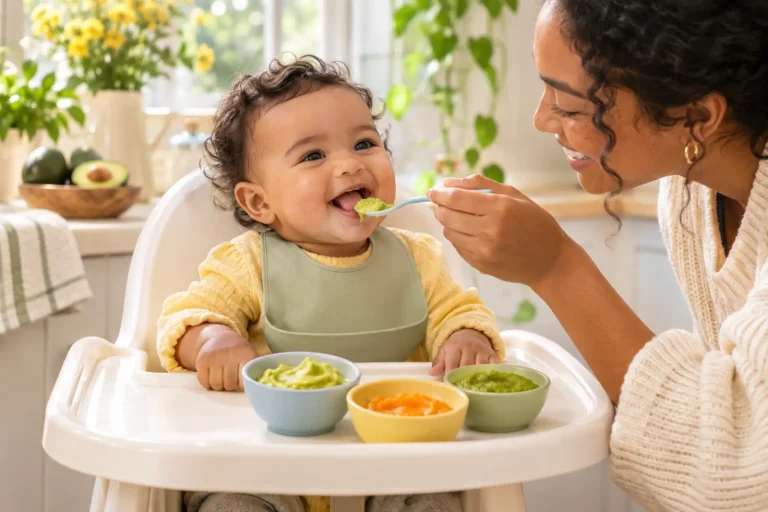
If your little one is just beginning their food journey, our guide to starting solid foods covers the earlier months. The tips below pick up where that leaves off.
Split the jobs at the table (tips 1–2)
1. Use the “division of responsibility”
A widely used feeding approach divides the work like this: you decide what food is offered, when and where. Your child decides whether to eat and how much. It sounds simple, but it removes most of the battles.
Offer a balanced meal with at least one food your child usually eats.
Serve meals and snacks at fairly regular times, at the table.
Trust your toddler to listen to their own hunger and fullness.
2. Keep a predictable meal and snack rhythm
Toddlers who graze all day — a cracker here, a pouch there — often aren’t hungry at mealtime. Offering meals and snacks at fairly regular times, with water in between, helps your child come to the table ready to eat and more willing to try something new.
Make new foods familiar (tips 3–4)
3. Offer new foods again and again
Repeated exposure is one of the most effective tools you have. It can take many tries — often more than parents expect — before a child accepts a new food. Seeing, smelling, touching and licking all count as progress, even if the food never makes it into their mouth this time.
4. Serve small portions next to a “safe” food
A mountain of broccoli can feel overwhelming. Offer one or two small pieces of the new food next to something your child already likes, such as rice, fruit or bread. Small portions feel manageable, and your toddler can always ask for more.
A “no thank you” today is still a step forward. Familiarity grows one exposure at a time.
Eat together, family-style (tips 5–6)
5. Share meals as often as you can
Toddlers learn by watching. When they see you enjoying vegetables, trying new flavors and chatting at the table, food becomes something social and safe. Even a few shared meals each week make a difference.
6. Let your toddler serve themselves
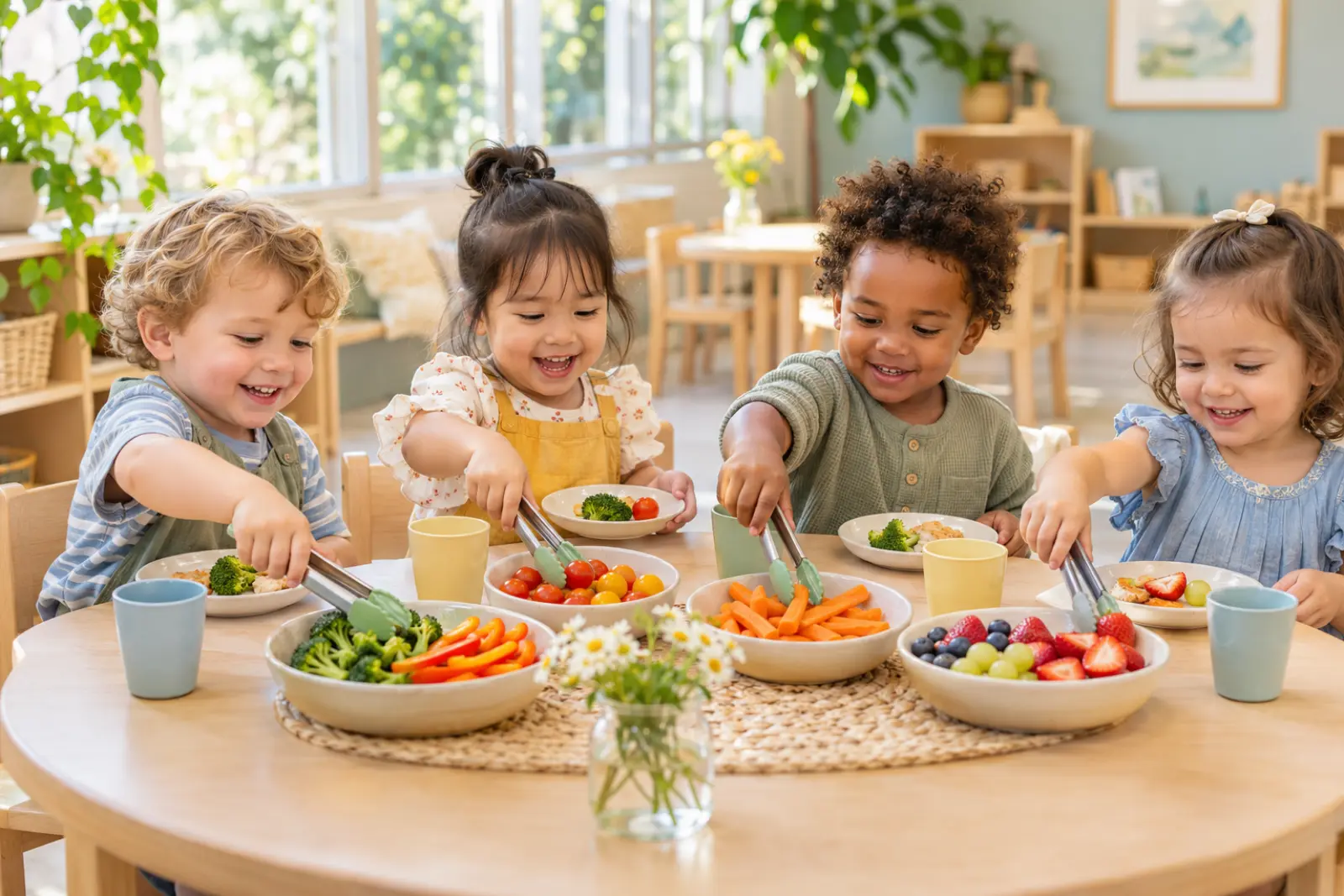
Put food in small bowls on the table and let your child use a spoon or tongs to take their own portion. Serving themselves gives toddlers a sense of control and makes them more curious about what’s in each bowl. Always cut food into safe, toddler-sized pieces — round foods like grapes and cherry tomatoes should be cut into small pieces to reduce the risk of choking.
At Bright Learning Academy meals and snacks are made fresh every day in our in-house kitchen and served family-style. Children in our toddler program meet new foods and flavors alongside their friends, which often helps cautious eaters feel brave. Nutrition is the first pillar of our N.I.C.E. framework — read more about our approach.
Invite them into the kitchen (tips 7–8)
7. Cook together
Children are far more likely to taste something they helped make. Toddlers can do more than you might think with a little supervision:
- Wash fruits and vegetables
- Tear lettuce or herbs
- Stir, pour and sprinkle
- Help set the table
8. Make food fun to explore
Talk about colors, shapes and crunchy versus soft. Offer a simple dip like yogurt or hummus, cut sandwiches into shapes or build a “rainbow” plate. Curiosity is a much better motivator than pressure.
In our classrooms cooking and nutrition lessons are part of the N.I.C.E. curriculum, so children get hands-on time with real ingredients and learn about food groups through play.
Take the pressure off (tips 9–10)
9. Skip bribes, rewards and “one more bite”
It’s tempting to say “two more bites and you can have dessert,” but bargaining tends to backfire. It teaches children that vegetables are a chore and dessert is the prize. Praising, pleading or forcing bites can also make a cautious eater more anxious. Keep the mood relaxed and the conversation off how much your child is eating.
10. Don’t become a short-order cook
Making a separate meal every time your toddler refuses dinner can lock in a very small menu. Instead, serve the family meal with at least one food your child usually accepts. If they eat only that today, that’s okay — the next meal or snack is never far away.
“You don’t have to eat it. You can look at it, smell it or touch it.” · “Your tummy will tell you when it’s full.”
When to worry about a picky eater toddler
Most picky eating is a normal phase. Still, talk to your pediatrician if you notice any of the following:
- Weight loss, or your child isn’t growing as expected
- Frequent gagging, choking, coughing or vomiting with meals
- A very short list of accepted foods that keeps shrinking
- Refusing whole food groups for a long time
- Extreme distress around new foods or mealtimes
- Ongoing constipation, low energy or tummy pain
Your pediatrician can check growth, rule out medical issues and, if needed, refer you to a feeding specialist or registered dietitian.
Picky eating FAQ
Is picky eating normal for toddlers?
Yes. Picky eating is very common between about ages 1 and 5. Slower growth, a natural wariness of new foods and a growing wish for independence all play a part. Most children gradually accept more foods with patient, repeated exposure.
How do I get my picky eater toddler to eat vegetables?
Offer small amounts of vegetables often, alongside foods your child already likes, and eat them yourself. Let your toddler help wash or stir, try dips and different textures, and avoid pressure or bribes. It may take many tries before a new vegetable is accepted.
Should I make my toddler try one bite?
Gentle invitations are fine, but insisting on a bite often creates a power struggle. It usually works better to keep offering the food without pressure and let your child explore it at their own pace.
What if my toddler barely eats dinner?
Toddler appetites vary a lot from meal to meal. Look at what your child eats over several days rather than one meal. If they skip dinner, offer the next planned snack or breakfast as usual. Talk to your pediatrician if you’re concerned about growth.
Patience at the table pays off
Raising a picky eater toddler takes patience, but you don’t need to win every meal. Offer variety, eat together, keep the pressure low and trust that tastes grow over time. We’d love to show you our kitchen and family-style lunch in action.
Happy meals start with relaxed tables.