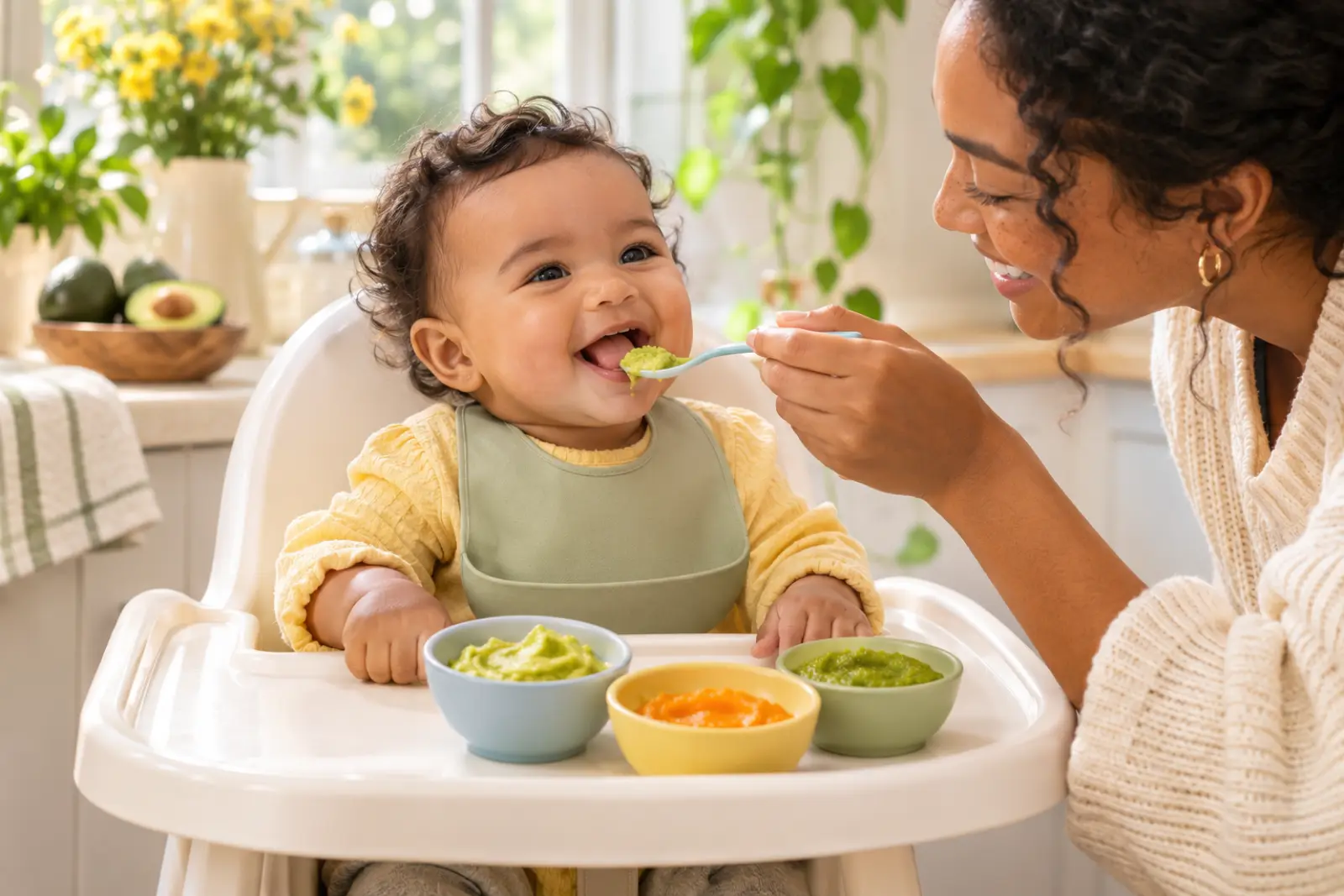
Starting solid foods is one of the messiest, funniest and most memorable milestones of your baby’s first year. It can also feel confusing, with plenty of conflicting advice about when to begin, what to offer first and how to keep mealtimes safe. The good news is that current pediatric guidance is simpler and more flexible than many parents expect.
This gentle guide covers the signs of readiness, good first foods, introducing common allergens, moving from purees to finger foods, and how to keep home and childcare on the same page.
- ~6 monthsa typical starting point
- Iron-richfoods early on
- Allergensearly, with your pediatrician
- No honeybefore 12 months
Starting solid foods: when is your baby ready?
The American Academy of Pediatrics recommends introducing solids at about 6 months. Until then, breast milk or formula provides what your baby needs, and it remains their main source of nutrition through the first year. Age is a guide, though; your baby’s readiness matters more than the calendar.
Look for these signs that your baby may be ready:
Sitting with support and steady head control tend to arrive around the same time, so our guide to baby milestones from 4 to 18 months is a helpful companion here. If your baby pushes food back out with their tongue every time, they may simply need a few more weeks. Talk to your pediatrician before starting, especially if your baby was born early or has any health concerns.
Good first foods for babies
There is no single “right” first food. What matters most is offering a variety of healthy foods over time, with a focus on iron, since babies’ natural iron stores start to run low around this age.
Iron-fortified infant cereal, pureed or finely minced meats, beans and lentils.
Well-cooked, mashed sweet potato, peas, squash, carrots or green beans.
Mashed avocado, banana, or cooked and pureed apple and pear.
Start with a teaspoon or two once a day and follow your baby’s lead. Some days they will eat eagerly; other days they will mostly play. Both are normal. Early meals are about tasting, touching and learning, not about quantity.
Skip added salt and sugar, and hold off on juice. After about 6 months you can offer small sips of water from an open or straw cup with meals.
Introducing common food allergens
Advice on allergens has changed. Current pediatric guidance supports introducing common allergenic foods, such as peanut and egg, early, once your baby has started solids and is tolerating other foods, rather than delaying them. For many babies, early and regular exposure may help lower the chance of developing a food allergy.
- Offer peanut only in a baby-safe form, such as smooth peanut butter thinned with water or mixed into a puree. Never whole peanuts or thick spoonfuls of peanut butter.
- Introduce one new allergen at a time, at home, at a time of day when you can watch your baby afterward.
- Once a food is tolerated, keep offering it regularly.
Important: if your baby has severe eczema, a known food allergy or a family history that worries you, talk to your pediatrician before introducing allergens. They may suggest a specific plan or testing first. If you ever notice signs of a serious reaction, such as trouble breathing, swelling of the face or repeated vomiting, call 911.
From purees to finger foods
Babies learn to eat by practicing new textures. Moving along gradually helps them build chewing skills and accept a wider range of foods later.
| Roughly | Texture | Examples |
|---|---|---|
| Around 6 months | Smooth purees and thin mashes | Infant cereal, pureed vegetables, mashed avocado |
| 7–8 months | Thicker mashes with soft lumps | Mashed beans, minced chicken, soft-cooked vegetables |
| 8–10 months | Soft finger foods | Small pieces of ripe banana, soft-cooked pasta, scrambled egg |
| Around 12 months | Most family foods, cut small | Soft, chopped versions of what the family eats |
Some families prefer to start with soft finger foods rather than spoon-feeding, an approach often called baby-led weaning. Either path can work. Ask your pediatrician what fits your baby, and follow the same safety rules whichever you choose.
Choking and food safety basics
Gagging is common and normal as babies learn; it is a reflex that helps move food forward. Choking is silent and serious. A few habits make every meal safer:
- Seat your baby upright for every meal
- Stay with your baby the whole time
- No honey before 12 months
- Quarter grapes and cherry tomatoes lengthwise
- No whole nuts, popcorn or hard candy
- Avoid raw, hard pieces of fruit or vegetables
- Cut hot dogs and sausages into tiny pieces, not rounds
- Cow’s milk as a drink waits until 12 months
Consider taking an infant CPR and first-aid class so you feel prepared. Many hospitals and community organizations offer them.
Keeping home and daycare in sync
If your baby is in childcare when you begin starting solid foods, a little coordination goes a long way:
- Introduce new foods at home first, especially allergens, so you can watch for a reaction.
- Share a running list of foods your baby has already tried and enjoyed.
- Tell caregivers about textures your baby is ready for, and any foods to avoid.
- Ask about mealtimes: what is served, how babies are seated and supervised, and how you will hear what your baby ate.
At Bright Learning Academy nutrition is the first pillar of our N.I.C.E. framework. In our infant program, we follow feeding schedules aligned with family preferences and introduce solids with safe, wholesome options from our in-house kitchen, where fresh meals and snacks are made daily.
As babies grow into toddlers, our curriculum keeps building healthy habits through family-style dining and hands-on cooking and nutrition lessons. And if your little one later becomes choosy at the table, our tips for picky eater toddlers can help.
Starting solids: frequently asked questions
Can I start solid foods at 4 months?
The AAP recommends waiting until about 6 months for most babies. Some pediatricians may suggest starting a little earlier for a specific baby, but solids are not recommended before 4 months. Talk to your pediatrician about your baby’s readiness.
How much should my baby eat when starting solid foods?
At first, just a teaspoon or two once a day. Gradually increase to two or three small meals a day as your baby shows interest, following their hunger and fullness cues. Breast milk or formula remains the main food for now.
What foods should babies avoid in the first year?
Avoid honey before 12 months, cow’s milk as a main drink, juice, and added salt and sugar. Skip foods that are choking hazards, such as whole nuts, whole grapes and popcorn, and offer soft, appropriately sized pieces instead.
Is constipation normal when starting solids?
Changes in poop are expected as your baby’s diet changes. Offering a variety of fruits and vegetables can help. If your baby seems uncomfortable or you are concerned, check in with your pediatrician.
A happy start at the table
Starting solid foods is a journey, not a race. With patience, variety and a few safety basics, you are giving your baby a lifelong head start on healthy eating. Want to see how we nourish our youngest learners? Come visit our South San Francisco center and see our infant room for yourself.
One tiny spoonful at a time.