You don’t need a lab, a kit or a science degree to explore STEAM with your child. The best STEAM activities for preschoolers use things already in your kitchen, backyard or recycling bin, and they turn a rainy afternoon into real experimenting, building and creating. Below are 10 easy ideas, what you’ll need for each, and what your child is learning while they play.
Every activity takes about 15–30 minutes, works for children roughly 3 to 5 years old, and can be made simpler or harder depending on your child. Most of all, they’re meant to be fun for both of you.
- 10 ideasscience, building, art, math
- 15–30 minper activity
- Household itemsnothing special to buy
- Adult nearbyfor every activity
Why STEAM activities for preschoolers matter
STEAM stands for Science, Technology, Engineering, Art and Math. For young children, it isn’t about memorizing facts. It’s about a way of thinking: noticing, wondering, guessing, testing and talking about what happened. Those habits feed straight into the early math, language and problem-solving skills on our kindergarten readiness checklist.
Preschoolers are natural scientists. They already drop spoons from the high chair to see what happens and pour water from cup to cup. STEAM play simply gives that curiosity some materials and a little structure, which is the heart of play-based learning.
You can use the same simple four-step rhythm for every activity below:
- Ask a question
- Make a guess
- Try it out
- Talk about it
Gather a few basics before you start:
Science: experiments and discovery
Science is the easiest place to start, because the “wow” is built in. These first four STEAM activities for preschoolers are all about guessing what will happen and then finding out.
1. Sink or float
You’ll need: a tub or sink of water and a handful of objects such as a spoon, cork, apple, crayon, leaf and toy block.
Hold up each object and ask, “Do you think this will sink or float?” Let your child sort guesses into two piles, then test them one by one. Surprises, like a big apple that floats, are the best part.
What they learn: predicting, observing, sorting and early ideas about weight and materials.
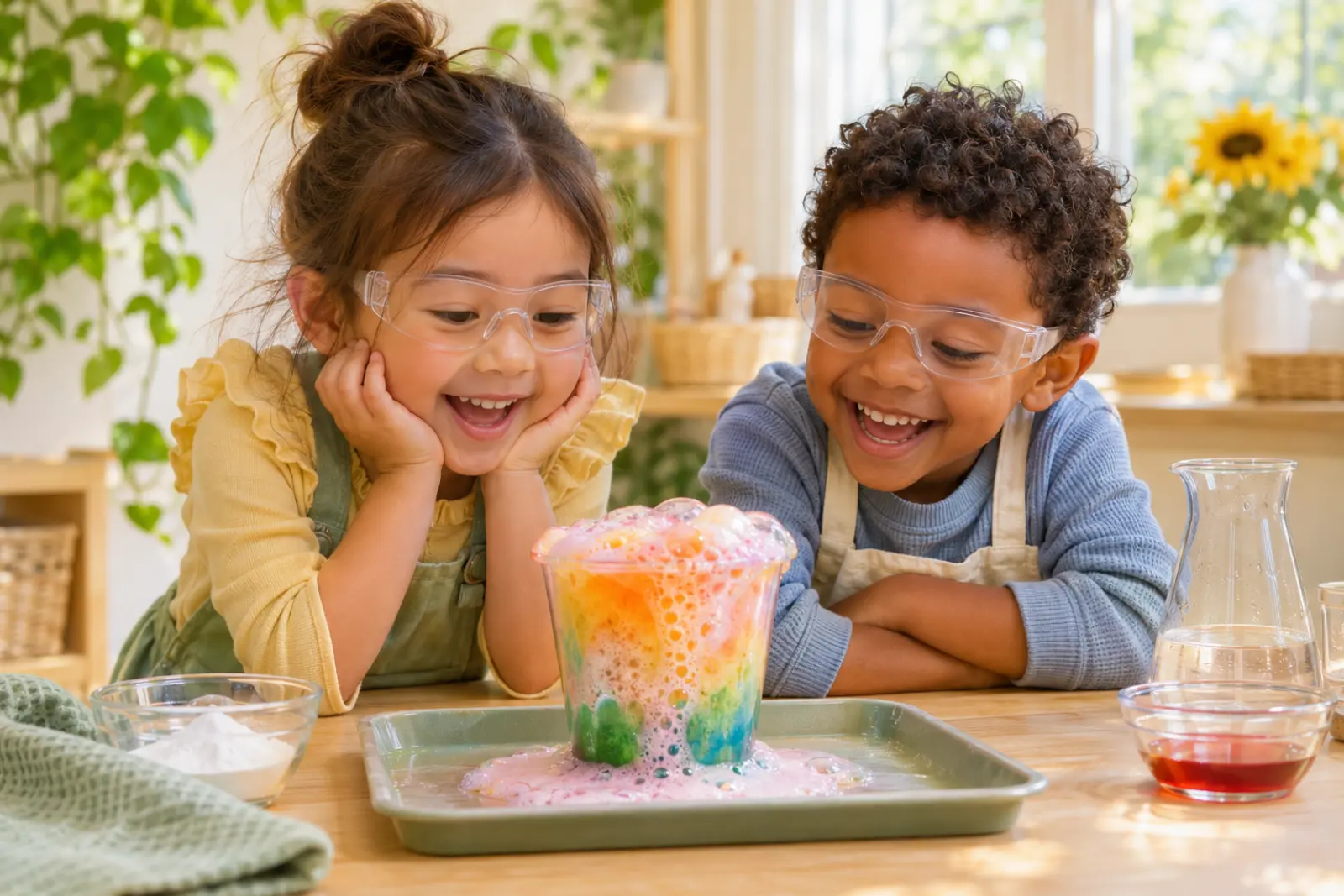
2. Baking soda volcano
You’ll need: a small cup on a tray, baking soda, vinegar, a drop of food coloring and dish soap for extra foam.
Put a spoonful of baking soda in the cup, add coloring and soap, then let your child pour in the vinegar and watch it fizz over. Try a little more or a little less vinegar next time and compare.
What they learn: cause and effect, measuring and the idea that mixing things can make something new.
3. Ice melt rescue
You’ll need: small plastic toys frozen in water overnight, plus warm water, spoons, droppers and a pinch of salt.
Challenge your child to “rescue” the toys. Which works faster: warm water, cold water, salt or just waiting? Let them choose the tools and the plan.
What they learn: melting and freezing, comparing methods, persistence and fine-motor control.
4. Nature scavenger hunt
You’ll need: a bag or egg carton and a simple picture list: something smooth, something rough, a leaf, a rock, something yellow.
Take it to a backyard or park. Back home, sort the treasures by size, color or texture and look closely with a magnifying glass if you have one.
What they learn: observation, describing words, classifying and respect for nature.
Technology and engineering: build and test
5. Ramp races
You’ll need: a piece of cardboard or a board, a stack of books and a few toy cars or balls.
Lean the ramp on one book and race two cars. Then add another book. Does the car go faster or slower? Farther or shorter? Try a towel on the ramp and see what changes.
What they learn: slopes and speed, simple machines, fair testing and comparison words like faster, farther and steeper.
6. Building with cups
You’ll need: a sleeve of plastic or paper cups and some cardboard squares.
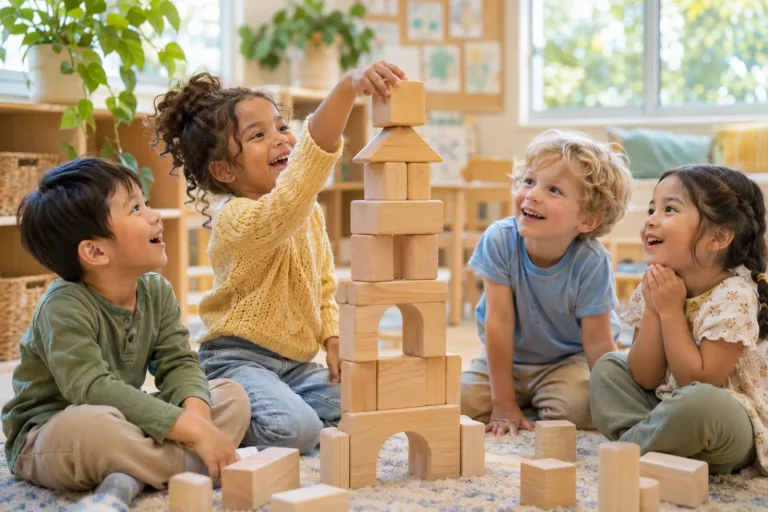
Ask, “How tall can we build before it falls?” Add cardboard “floors” between layers and experiment with wide bases versus narrow ones. Knocking it down and starting over is part of the plan.
What they learn: balance, stability, planning, counting and handling frustration when things don’t work the first time.
Art: color, light and shadow
7. Color mixing
You’ll need: red, yellow and blue paint or water tinted with food coloring, clear cups or an ice cube tray, and a dropper or spoon.
Start with the three primary colors and let your child mix any two. What happens with red and yellow? Blue and yellow? Name each new color together and make a little color chart to keep.
What they learn: color names and mixing, cause and effect, and the hand control that later supports writing.
8. Shadow drawing
You’ll need: small toys or animal figures, paper, crayons and either a sunny window or a flashlight.
Stand the toy on the paper so its shadow falls across the page and trace the outline. Move the light and watch the shadow grow, shrink or stretch. Outdoors, trace each other’s shadows with chalk in the morning and again later in the day.
What they learn: light and shadow, shapes, perspective and creative drawing.
Math: measuring and patterns
9. Kitchen measuring
You’ll need: measuring cups and spoons, a big bowl of dry rice or water, and a few containers of different shapes.
How many small cups fill the big one? Does the tall, skinny jar hold more than the short, wide bowl? Then put the skill to work by helping you measure ingredients for a simple recipe.
What they learn: counting, volume, comparing amounts and math words like more, less, full, half and empty.
10. Pattern necklaces
You’ll need: uncooked tube-shaped pasta, a shoelace or yarn with tape around the tip, and a few markers or paints to color the pasta.
Start a pattern, such as red, blue, red, blue, and ask what comes next. As your child gets the idea, try three-color patterns or let them invent one for you to copy.
What they learn: recognizing and extending patterns, a key early-math skill, plus fine-motor practice.
Safety tips for STEAM at home
Most STEAM activities for preschoolers are low risk, but young children explore with their hands and mouths. Keep a few rules in place:
- An adult stays within arm’s reach the whole time
- Never leave a child alone near water, even a shallow tub
- Skip small objects and beads for children who still mouth toys
- Use child-safe goggles for fizzing or splashing activities
- Rinse eyes with water if vinegar or salt splashes
- Wash hands afterward and clean up together
If you have a younger sibling around, set up the activity at a table they can’t reach, and put small pieces away before the toddler joins in.
At Bright Learning Academy STEAM is part of our Creativity pillar. In our preschool program, children explore science through observation and experimentation, take on simple engineering challenges, and practice math with hands-on measuring, sorting and patterns. Cooking lessons and nature exploration are part of our curriculum too.
Frequently asked questions
What is an example of a STEAM activity for preschoolers?
Sink or float is a classic. Your child guesses whether objects will sink or float, tests them in water, and talks about what happened. It covers predicting, observing and sorting in about 15 minutes.
At what age can children start STEAM activities?
Toddlers can enjoy very simple versions, like pouring water or stacking cups, with close supervision. Most of the STEAM activities for preschoolers in this list work best for children around 3 to 5, when they can follow two-step directions and talk about what they notice.
How often should we do STEAM activities at home?
There’s no set rule. One or two short activities a week is plenty, and everyday moments count too, like measuring while cooking or noticing shadows on a walk. Follow your child’s interest rather than a schedule.
What if my child loses interest halfway through?
That’s completely normal for preschoolers. Stop while it’s still fun, leave the materials out if you can, and try again another day. Children often return to an idea on their own once it’s familiar.
Curious minds, busy hands
A few cups, some baking soda and a curious preschooler are all you need to start. Pick one activity this week, follow your child’s questions, and enjoy the “Whoa!” moments together. If you’d like to see how we bring STEAM into the classroom every day, we’d love to show you around.
Ask, guess, try, talk, and then try again.