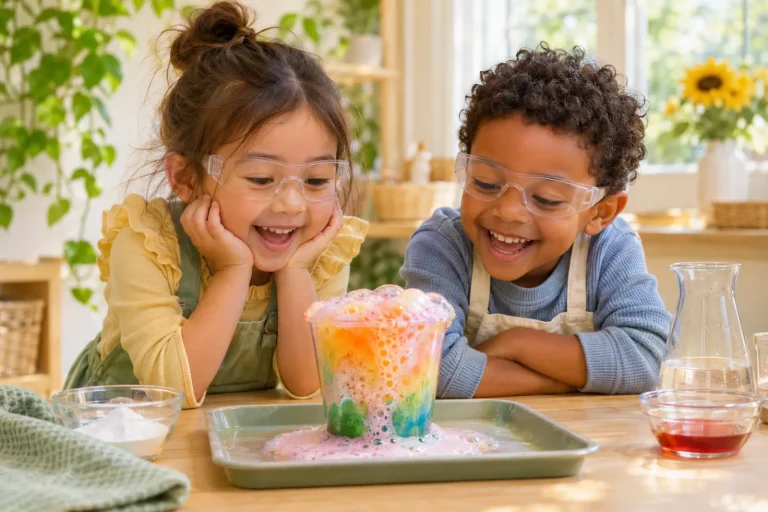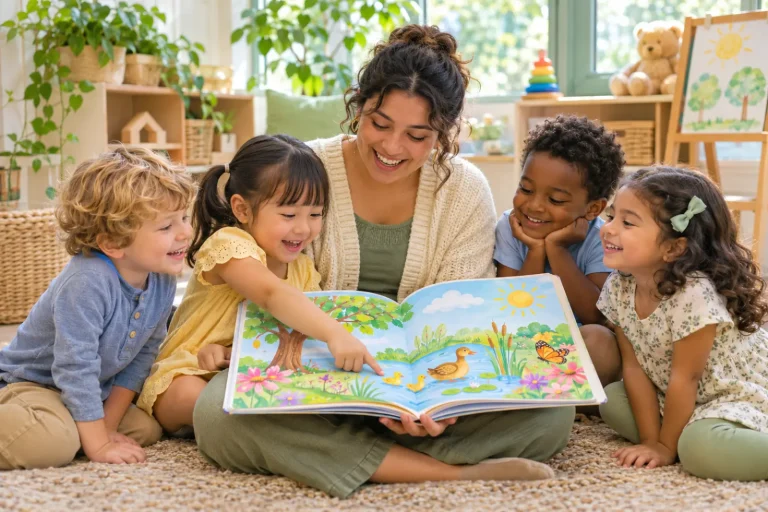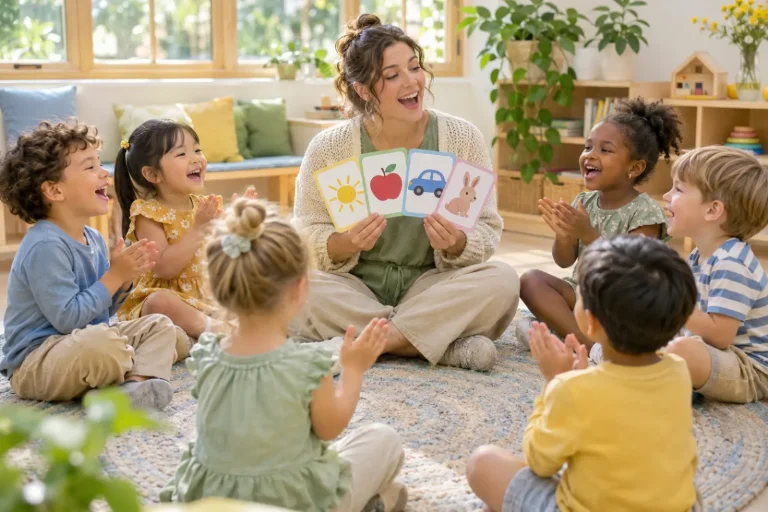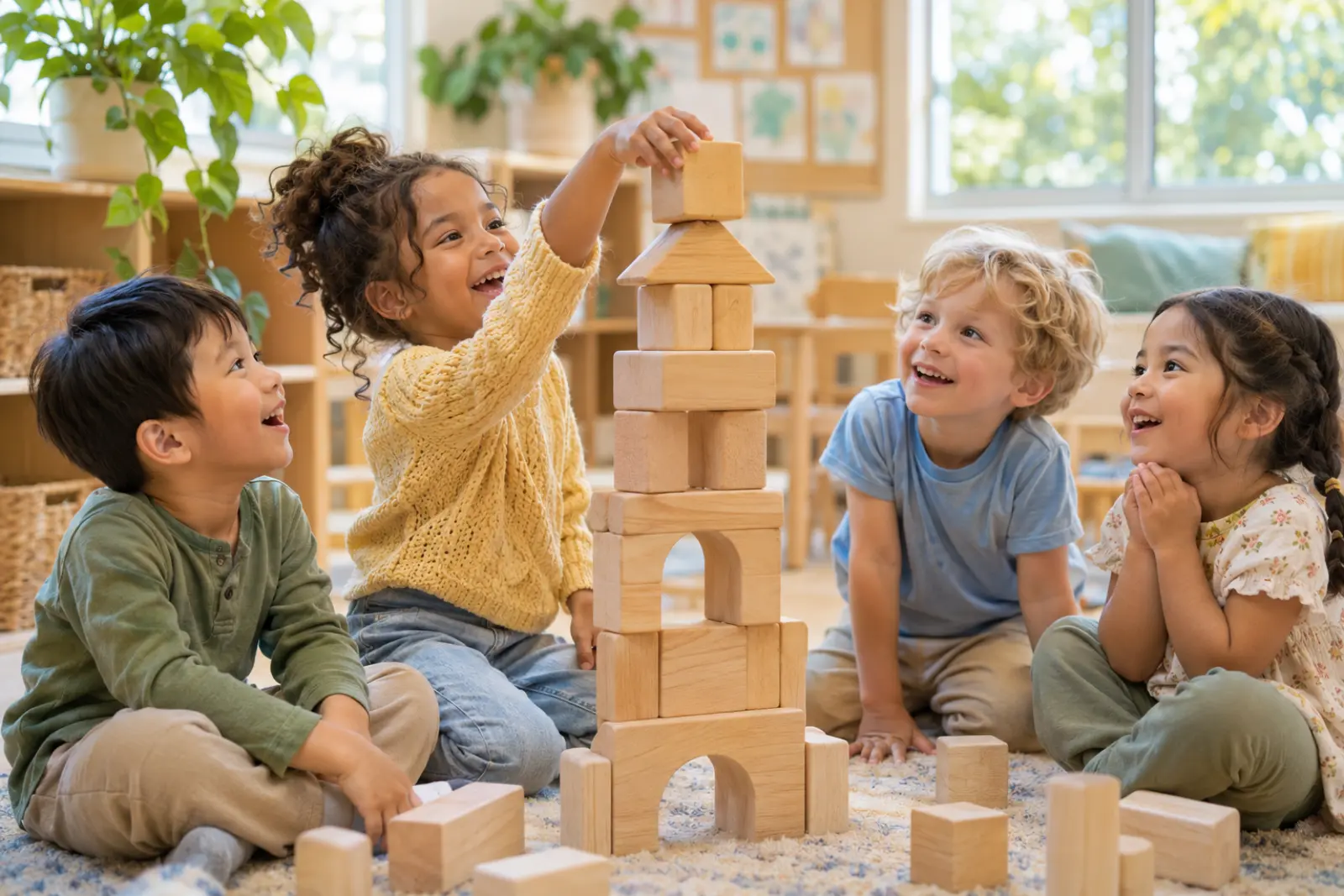
Walk into a good preschool classroom and it can look like the children are “just playing.” Look a little closer and you’ll see play-based learning at work: a child counting blocks to make two towers match, two friends negotiating who gets to be the baker, a toddler discovering that wet sand holds its shape and dry sand doesn’t. For young children, play isn’t a break from learning. It’s how learning happens.
This guide explains what a play-based approach really means, what children learn in each corner of the classroom, how it builds early reading and math, and how you can support the same kind of learning at home without buying anything new.
- Child-ledchildren choose and explore
- Teacher-guidedwith clear learning goals
- Whole childlanguage, math, social skills
- At home toono special toys needed
What is play-based learning?
Play-based learning is an approach to early education where children build skills and knowledge through hands-on, meaningful play rather than worksheets and drills. It rests on two ingredients that work together:
- Child-led play. Children choose materials, follow their curiosity and decide where an idea goes next. This is where motivation, focus and creativity come from.
- Teacher-guided play. Teachers set up the room with purpose, join in, ask open questions and gently stretch the play toward a skill, such as counting, describing or taking turns.
A quality play-based program is not “anything goes.” The play is intentional. Teachers know which skills each activity supports, they watch what each child can do, and they plan the next day’s materials around what they see. Short, playful group times, like a song, a story or a counting game, sit comfortably alongside longer stretches of free exploration.
What children learn in each play area
Every area of a play-based classroom is quietly loaded with learning. Here is what is happening beneath the fun:
Counting, comparing sizes, balance, early engineering and planning a build with a friend.
New vocabulary, storytelling, empathy, and practicing real-life roles like shopkeeper or doctor.
Pouring, measuring, cause and effect, and early science words like full, empty, heavy and light.
Fine-motor control for later writing, color mixing, and expressing ideas and feelings.
Love of stories, attention, problem solving and noticing how shapes fit together.
Rhythm, rhyme, listening skills, coordination and following simple directions.
Just as important are the social skills woven through all of it: sharing materials, waiting for a turn, solving a disagreement over the last red block, and recovering when a tower falls down.
How play builds early literacy and math
Parents sometimes worry that a play-focused classroom means less “real” learning. In practice, play is one of the best ways to build the foundations that reading and math rest on.
Early literacy through play
When children rhyme during a silly song, they are practicing phonological awareness, the ability to hear the sounds inside words. When they “write” a menu for a pretend restaurant, they learn that print carries meaning. When they retell a favorite story with puppets, they build vocabulary and a sense of beginning, middle and end. These are the same pre-reading skills that make learning to read easier later on.
Early math through play
Setting the table in the play kitchen is one-to-one correspondence. Sorting toy animals by size or color is classification. Building a block road “longer than the rug” is measurement. Stringing beads red, blue, red, blue is pattern work. Children learn these concepts deeply because they use them to get something done that matters to them.
If you want to try some of this at home, our list of easy STEAM activities for preschoolers turns everyday materials into science, building and math play.
Play-based learning with intentional goals
The strongest programs don’t treat play and learning goals as opposites. They blend them. Children get long, uninterrupted time to explore, and teachers weave in short, intentional moments that build specific skills, from letter sounds to counting to naming feelings.
Children learn best when they are curious, active and having fun, and a good teacher knows exactly what they’re learning while they do.
This balance also shifts with age. Infants and toddlers learn almost entirely through sensory exploration and play with a caring adult. Preschoolers are ready for a bit more structure, like small-group activities and simple projects, which is part of what separates a preschool classroom from general childcare. Our guide to daycare vs. preschool explains those differences in more detail.
At Bright Learning Academy we blend play-based discovery with intentional, age-appropriate learning goals through our N.I.C.E. framework of Nutrition, Independence, Creativity and Education. You can see how block towers, cooking, art and Spanish songs connect to real skills in our curriculum.
What to look for in a play-based classroom
On a tour, the signs of a high-quality program are easy to spot once you know what to look for:
- Clear play areas with open-ended materials
- Toys and books on low, reachable shelves
- Teachers on the floor, playing and talking
- Children’s own art on the walls, not copies
- A predictable daily rhythm children can follow
- Busy, happy noise rather than silence or chaos
“How do you know what each child is learning during play, and how do you share that with families?”
A thoughtful answer will mention observation, simple notes or photos, and how teachers plan next steps. For older children, ask how the program prepares them for kindergarten. You can read how our preschool program combines play, STEAM and early literacy for ages 3–6.
How to support play-based learning at home
You don’t need a classroom or a cart full of educational toys. A few simple habits make home play richer:
- Offer open-ended materials
- Follow your child’s lead
- Talk about what they’re doing
- Protect unhurried playtime
Open-ended materials are things that can become many things: blocks, cardboard boxes, play dough, scarves, pots and spoons. Following their lead means joining the game they’ve invented rather than redirecting it. Talking about it sounds like “You stacked five blocks! What will happen if you add one more?” And unhurried time matters, because deep play takes a while to get going.
It also helps to keep screen time limited and let your child be a little bored now and then. Boredom is often the moment right before a great idea.
Frequently asked questions
Does play-based learning prepare children for kindergarten?
Yes, when it is done with intention. Kindergarten readiness depends on early literacy and math foundations, plus attention, independence and getting along with others. A well-run play-based program builds all of these, and many also include structured readiness activities for older preschoolers.
Will my child learn letters and numbers in a play-based preschool?
Yes. Letters, sounds, counting and shapes show up constantly in songs, games, art, cooking and pretend play. The difference is that children meet them in meaningful, hands-on ways instead of through drills and long worksheets.
What are the downsides of play-based learning?
The main risk is a program that calls itself play-based but offers little teacher guidance, so play stays unfocused. That’s why it helps to ask how teachers plan, observe and track each child’s progress.
What age is play-based learning best for?
Play is the main way children learn from infancy through the early elementary years. What changes with age is the balance: babies and toddlers learn mostly through exploration, while preschoolers benefit from more guided projects and small-group activities.
See learning through play in action
The best way to understand learning through play is to watch it happen. Come see our classrooms, meet our teachers, and notice how much learning hides inside a block tower or a pretend bakery.
Where curiosity leads, learning follows.