Between 18 months and 3 years, toddler language development takes off in a way that can feel almost magical. Single words turn into short phrases, phrases turn into questions, and one day your child is telling you a story about the dog at the park. The best part? You don’t need flashcards or special programs — everyday moments together are what build words.
Below you’ll find what’s typical at this age, 12 simple ways to grow your toddler’s vocabulary, what to know if your family speaks more than one language, and when it’s worth checking in with a professional.
- Talk oftennarrate everyday moments
- Read dailypoint, name and ask
- Sing & rhymerepetition builds words
- Two languagesdon’t cause delays
Toddler language development: what’s typical
Every child develops at their own pace, and there’s a wide range of normal. Many toddlers understand much more than they can say. The CDC’s “Learn the Signs. Act Early.” milestones offer a helpful picture of what most children do by certain ages:
| By about… | Many children can… |
|---|---|
| 18 months | Try to say three or more words besides “mama” or “dada,” and follow simple one-step directions |
| 2 years | Put two words together, like “more milk,” and point to things in a book when you ask |
| 2½ years | Say about 50 words, use an action word in short phrases (“doggie run”) and name things in a book |
| 3 years | Have a short back-and-forth conversation, ask “what,” “where” or “why” questions and say their first name |
Milestones are a guide, not a test. If you’re curious about what came before this stage, our guide to baby milestones from 4 to 18 months covers the early babbling and first-word months.
Talk together all day (ideas 1–4)
1. Narrate what you’re doing
Describe your day out loud like a friendly sportscaster: “I’m washing the red apple. Now I’m cutting it. Crunch!” Hearing words linked to real actions helps toddlers connect language to meaning.
2. Expand on their words
When your toddler says “truck,” add a little more: “Big truck! The big truck is loud.” You’re modeling the next step without correcting them. If they say a word imperfectly, simply repeat it back the right way — “Yes, banana!” — rather than asking them to say it again.
3. Pause and wait
Conversation is a turn-taking game. After you say something, pause for several seconds with an expectant smile. That pause gives your toddler time to respond with a word, sound or gesture — and every response counts.
4. Offer simple choices
“Do you want the banana or the yogurt?” Choices give toddlers a reason to use words and a model of exactly which words to use. Hold up both options so they can see them.
Read, sing and rhyme (ideas 5–7)
5. Read together every day
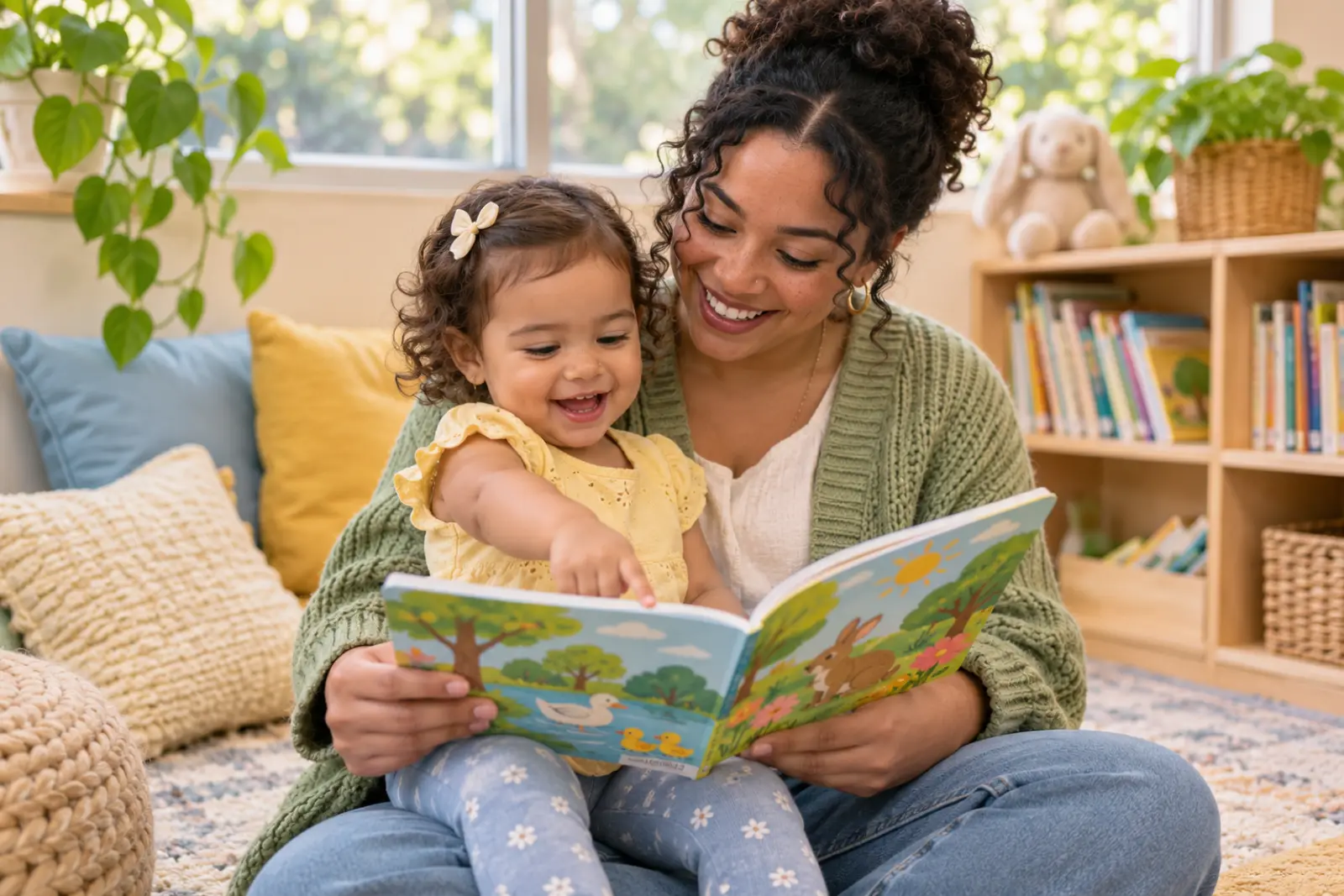
Short and often beats long and rare. Let your toddler choose the book, turn the pages and point. You don’t have to read every word — talk about the pictures: “Where’s the cat? There it is! The cat is sleeping.” Rereading favorites is a good thing; repetition helps new words stick. Shared reading also lays the groundwork for the pre-reading skills children build in preschool.
6. Sing songs and fingerplays
Songs slow language down and repeat it, which makes words easier to catch. Action songs like “The Wheels on the Bus” pair words with movements, so even toddlers who aren’t talking much yet can join in.
7. Play with rhymes and sounds
Silly rhymes, animal sounds and made-up words (“silly billy willy!”) help toddlers tune in to the sounds that make up words — an early step toward reading later on.
Play, pretend and gesture (ideas 8–10)
8. Get into pretend play
Feeding a teddy bear, making “soup” in a toy pot or driving cars to the store gives you endless chances to name objects and actions. Follow your toddler’s lead and add words to whatever they’re already doing.
9. Use simple signs and gestures
Signs like “more,” “all done” and “help” give toddlers a way to communicate while their speech catches up. Gestures don’t replace talking — say the word every time you sign it, and many children drop the sign once the word comes.
10. Name the world around you
Walks, grocery trips and bath time are full of new words. Point and name: “Look, a bus! The bus is stopping.” Go beyond nouns, too — words like up, wet, fast and under help toddlers build longer sentences.
At Bright Learning Academy language and communication are at the heart of our toddler program. Teachers build early literacy through stories, songs and rhymes, our curriculum includes sign language, and every age group enjoys a daily Spanish immersion block.
Set the stage for talking (ideas 11–12)
11. Turn off background screens
A TV playing in the background competes with your voice and tends to mean fewer back-and-forth conversations. For young toddlers, the American Academy of Pediatrics recommends keeping screen use very limited, with video chatting with loved ones as a reasonable exception. When screens are on, watch together and talk about what you see.
12. Get face to face
Sit on the floor, kneel at eye level or hold your toddler on your lap during a book. When your child can see your face and mouth, it’s easier to watch how words are formed — and easier for you to notice their attempts to communicate.
The best language lesson is a warm, back-and-forth conversation — even when one side is mostly babble.
Raising a bilingual toddler
If your family speaks two languages, you may wonder whether that will slow your child down. Current research and pediatric guidance are reassuring: learning two languages does not cause language delays. Bilingual toddlers may mix words from both languages in one sentence, and each language on its own might look a bit smaller — but combined, their vocabulary is typically right on track.
- Speak the language you’re most comfortable and expressive in.
- Give your child plenty of rich, everyday exposure to both languages.
- Count words in both languages when tracking milestones.
Exposure to a second language early on can be a real gift. Learn more in our article on the benefits of a bilingual preschool.
When to talk to your pediatrician
The CDC encourages parents to act early on concerns rather than waiting to see. Talk to your child’s doctor at any time if you have questions, and especially if your toddler:
- Isn’t meeting the milestones above for their age
- Doesn’t seem to understand simple words or directions
- Rarely points, gestures or tries to get your attention
- Loses words or skills they used to have
Your pediatrician may suggest a hearing check or a referral to a speech-language pathologist. In California, families with children under 3 can also ask about the state’s Early Start early intervention program. Early support is effective, and asking is never an overreaction.
Toddler language development FAQ
How many words should a 2-year-old say?
There’s a wide range. By 2, many children say a growing number of words and start putting two words together, like “more milk.” By about 2½, many say around 50 words. If you’re concerned about your child’s progress, talk to your pediatrician.
Is it normal for a toddler to understand more than they say?
Yes. Understanding usually runs ahead of speaking. A toddler who follows directions, points to pictures and responds to their name is building a strong foundation, even if their spoken words are still catching up.
Does being bilingual cause speech delays?
No. Learning two languages does not cause language delays. Bilingual toddlers may mix languages or have a smaller vocabulary in each one, but their total vocabulary across both is typically on track. Any real delay will show up in both languages.
Can daycare help with toddler language development?
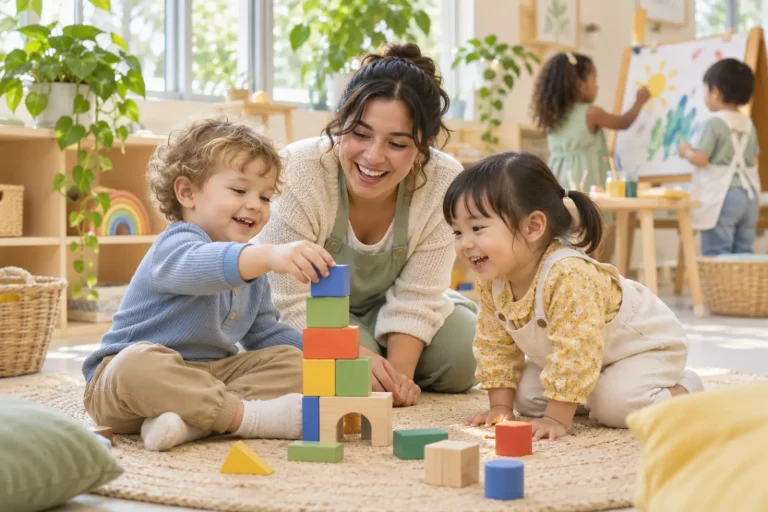
A quality program can help a lot. Daily conversations with caring teachers, stories, songs and playing alongside other children all give toddlers more chances to hear and use new words.
Every word is worth celebrating
Toddler language development happens through ordinary moments — a story at bedtime, a song in the car, a chat about the bus going by. Keep talking, keep reading and keep listening, and your child’s words will follow. Come see how our teachers fill each day with stories, songs and conversation.
Small conversations today, big storytellers tomorrow.